


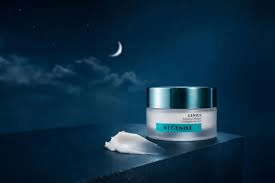


If you’ve noticed fewer Algenist products on shelves or heard rumors about the brand struggling, you’re not alone. But the picture is more complicated than a simple yes or no. The short answer, based on available public data, is no — Algenist does not appear to be going out of business.
This article breaks down the brand’s current legal status, ownership, sales activity, and product direction. It also explains why people get the wrong impression, and how to tell the difference between a brand that’s closing and one that’s just changing.
What Algenist Is and Where It Stands Today
Algenist was founded in 2011 in California. The brand focuses on anti-aging skincare using microalgae and algae-derived ingredients. It sits in the mid- to premium price range in the personal care market.
From a legal standpoint, Algenist LLC is registered in California and listed as Active. There is no public record of dissolution or bankruptcy filing. Corporate registry data shows the entity was formed in August 2016 and remains a functioning business.

The brand’s website, algenist.com, is active. Products are still available through retail channels. PitchBook estimates around 30 employees, with the company headquartered in Manhattan Beach, CA. These are all signs of an operating business, not a shuttered one.
Who Owns Algenist and What That Means for Stability
Ownership is one of the clearest indicators of a brand’s direction. Tengram Capital Partners acquired a majority stake in Algenist from TerraVia, which was formerly known as Solazyme. TerraVia retained roughly 20% ownership and continues to supply the algae-based ingredients used in Algenist’s products.

The deal included approximately $20 million in capital to support growth and commercialization. That’s not the kind of money investors put into a brand they’re planning to shut down.
CB Insights also shows additional financing activity, including a loan and PPP funding. These are signs of a company managing its operations in the normal way, not one that’s winding down. The ongoing ingredient supply relationship with TerraVia also matters — it means the products have a consistent source for their core active ingredients.
Algenist’s Sales and Scale — A Realistic Look at the Numbers
ECDB estimates Algenist’s annual sales at roughly US$2 million in 2025. That confirms the brand is generating revenue. It’s not a household name generating hundreds of millions, but it’s not closed either.
To put that in perspective, Algenist operates more like a specialized boutique than a mass-market brand. With around 30 employees and $2 million in estimated annual sales, this is a niche business. That’s completely normal for a specialty skincare brand built around a specific ingredient platform.
Small scale does come with real risks. The brand depends on investor support, relies on TerraVia for key ingredients, and has to compete in a skincare market that moves fast. But size alone doesn’t signal closure. Many small brands operate profitably at this level for years without making headlines.
It’s also worth noting that these figures are estimates from third-party databases. They give a useful sense of scale, but they’re not official audited figures.
New Products and Retail Presence — What Algenist Is Actually Doing Right Now
One of the strongest arguments against the “going out of business” narrative is what Algenist is actually launching. According to reporting from Glossy, the brand has been actively updating its product lineup.
Recent additions include a vegan neck cream, supplement powders, and an AA Barrier Serum focused on anti-pollution protection. The brand is also reformulating existing products to align with a more vegan and wellness-oriented direction.
Products are available on its own website and through retail partners including Sephora and QVC. Brands that are quietly closing don’t typically launch new product categories or push into wellness-focused formats. This activity points to a strategic shift, not a shutdown.
It’s also worth understanding what’s happening with older products. When a brand reformulates its lineup, it often phases out legacy SKUs. Customers who can’t find a specific serum or cream they used to buy sometimes assume the brand is collapsing. In most cases, the product was simply discontinued as part of a portfolio update — which is standard practice in the beauty industry.
Why Shoppers Think Algenist Might Be Closing (And Why That Logic Has Gaps)
There are a few common reasons people assume a brand is going under, and most of them apply here.
- Reduced shelf presence: If a product disappears from a specific Sephora location, it might be a merchandising decision, not a sign of financial trouble. Retailers regularly rotate assortments.
- Discontinued SKUs: Phasing out older products during a reformulation gets misread as the brand shrinking. It’s usually the opposite — the brand is updating.
- Less social media noise: Smaller brands don’t always maintain a loud marketing presence. Quiet doesn’t mean closed.
- Industry rumors: Beauty is a competitive space. Brands consolidate, pivot, and get acquired all the time. That creates background noise that makes any quiet brand sound like it’s struggling.
None of these factors, on their own, are reliable signals that a brand is going out of business. The real signals to look for are corporate dissolution records, bankruptcy filings, a non-functional website, social channels that have gone dark for months, and removal from all major retailers with no explanation. Algenist doesn’t currently show any of those signs.
A Note on Algenist’s Cruelty-Free and Vegan Status
Some of the online confusion around Algenist also ties into its ethical positioning. CrueltyFreeKitty notes that Algenist is not cruelty-free — the brand tests on animals where required by law, such as in certain markets. It is also not fully vegan, as some products contain animal-derived ingredients.
This creates an odd tension with the brand’s push toward vegan reformulations. Some products in the updated lineup are vegan, but the brand as a whole doesn’t qualify for cruelty-free certification at this time. Consumers who discover this sometimes react strongly, which can fuel speculation about the brand’s future.
To be clear: ethical criticism can affect sales and brand reputation, but it’s separate from whether a business is financially solvent. Many brands operate in markets that require animal testing and continue to function for years.
How to Tell If a Beauty Brand Is Actually Closing
If you want to check whether any brand — not just Algenist — is genuinely shutting down, here’s what to look at.
Check the state business registry. Most U.S. states let you search LLC and corporation status online. If a company is dissolved or inactive, it will show there.
Look for bankruptcy filings. PACER (the federal court system) lets you search for bankruptcy cases. No filing means no formal insolvency proceeding.
Check the official website. A closed brand usually takes its website down or stops updating it entirely.
Look at retailer listings. If every major retailer has removed the brand with no replacement products, that’s a stronger signal. One or two dropped SKUs is not.
Follow the brand’s social media. Complete silence for many months, especially with no response to customer messages, is worth noting.
For Algenist specifically, the corporate record shows an active entity, the website is functional, new products have launched, and retail partnerships remain in place. That’s a consistent picture of a brand that is operating.
For more analysis on business health signals and brand activity, Business Regards covers these topics in straightforward terms.
The Bottom Line
Based on available public data, Algenist is not going out of business. The LLC is legally active. The brand has investor backing, a functioning website, an updated product lineup, and ongoing retail distribution. Annual sales are estimated at around $2 million in 2025, which puts it firmly in boutique territory — small, but operating.
What you’re likely seeing is a brand in the middle of a strategic shift. The move toward vegan formulas, wellness products, and anti-pollution skincare is a response to how consumer preferences have changed. That kind of pivot often involves retiring old products and expanding into new categories — which can look confusing from the outside.
If you’re a customer wondering whether to stock up on a favorite product or try something new from the brand, the data suggests Algenist is still in business and still developing new products. That said, it’s a small brand with the risks that come with that scale. Keeping an eye on its website and retailer listings is the most practical way to stay informed.
Also Read This :