


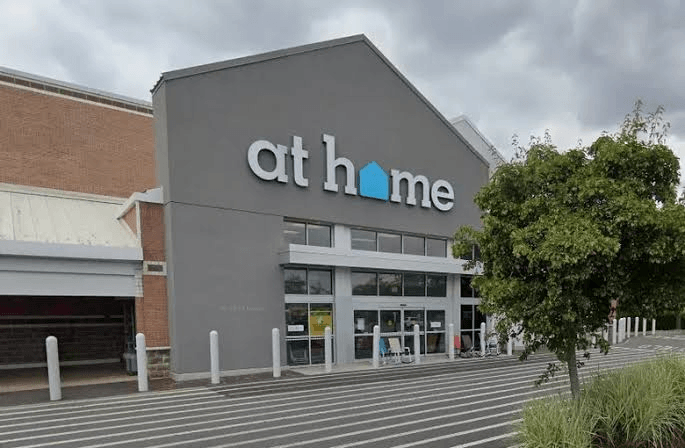


When At Home filed for bankruptcy in June 2025, headlines about store closures spread fast. A lot of people read those headlines and assumed the whole chain was shutting down. That’s not what’s happening — but the full picture is worth understanding before you write off your local store.
This article covers what Chapter 11 bankruptcy actually means for At Home, how many stores are closing, why the company ended up here, and what you should know as a customer.
At Home Is Not Closing Entirely — Here Is What Is Actually Happening
At Home filed for Chapter 11 bankruptcy on June 16, 2025. This is not the same as going out of business. Chapter 11 is a court-supervised process designed to help a company restructure its debts and keep operating — not shut everything down.
Out of more than 220 locations, about 30 to 31 stores are closing. The majority of At Home stores remain open and are running normal operations. The U.S. Bankruptcy Court approved At Home’s reorganization plan, which clears the path for the company to emerge from bankruptcy with new ownership and significantly less debt.

So the short answer is: specific stores are closing, but the company as a whole is not going out of business.
Chapter 11 vs. Going Out of Business — The Difference Matters
Most people picture a full shutdown when they hear “bankruptcy.” That’s actually Chapter 7, which involves liquidating everything and closing permanently. Chapter 11 is different.

Chapter 11 lets a company keep running while it works out a plan to reduce debt and fix its finances — all under court supervision. The goal is survival, not liquidation. At Home’s filing explicitly stated that reorganization and continued operations were the purpose, not a wind-down.
A simple way to think about it: imagine a household that’s drowning in debt. Instead of losing everything, the family consolidates loans, sells a second car, and renegotiates payment terms. The house stays. Life continues. The finances just look different going forward. That’s roughly what At Home is doing — closing underperforming stores, cutting debt, and trying to move forward on a more stable footing.
According to USA TODAY and NBC DFW, At Home entered Chapter 11 to eliminate roughly $2 billion in debt and secure new financing. That’s a restructuring, not a shutdown.
Why At Home Ended Up in Bankruptcy
The debt load is the core issue. When private equity firm Hellman & Friedman took At Home private, the company took on roughly $2 billion in debt to fund the deal. That level of debt is manageable when conditions are favorable — but conditions stopped being favorable.

In May 2025, At Home missed an interest payment and entered a forbearance agreement with lenders. At that point, the company reportedly had about $17.3 million in available borrowing capacity — a tight number for a large retail chain. Bankruptcy was the likely outcome from that point forward.
Court filings point to several factors that made the debt unmanageable:
- Rising interest rates made the cost of carrying that debt much higher.
- Inflation squeezed both operating costs and consumer budgets.
- Higher tariffs on imported goods increased the cost of the products At Home sells.
- Weaker consumer demand for discretionary home décor hit sales.
- Post-pandemic spending shifts and intense competition in the home goods space added more pressure.
None of these problems are unique to At Home. Other retailers in the home goods space have faced the same headwinds. But the heavy debt from the private equity deal left At Home with very little cushion when things got harder.
Which At Home Stores Are Closing and Where
The initial bankruptcy plan listed 26 store closures by September 30, 2025. That number later grew to about 30 to 31 total locations, including some non-operational sites.
California has the largest number of closures, with around eight locations shutting down. Closures are spread across multiple states, though the full list has been updated more than once as the case progressed.
Closing stores are running court-approved going-out-of-business sales managed by Hilco. That means discounts on merchandise, store fixtures, and equipment. If your local At Home is on the closure list, the sale is worth checking out — but understand that inventory and selection will shrink as the sale continues.
Stores not on the closure list are operating normally. To check whether a specific location is affected, look at the current list on athome.com or check recent news coverage, since store counts and timelines can shift.
What Happens Next for At Home as a Company
The reorganization plan approved by the bankruptcy court significantly reduces At Home’s debt load. The company will also gain access to roughly $500 million in asset-based financing, which gives it a more manageable financial structure going forward.
Ownership is also changing. Control shifts from the private equity firm to a group of lenders including Redwood Capital Management, Farallon Capital Management, and Anchorage Capital Advisors. These are the creditors who are effectively trading debt for ownership of the company.
According to Business of Home, At Home emerges from Chapter 11 with about 30 fewer stores than its original footprint of roughly 260 locations, and there are no public plans for additional closures beyond the announced ~30. The company says it will continue reviewing store leases for profitability, which means the footprint could still shift slightly — but no mass closure wave is announced.
For more coverage of retail business developments like this, Business Regards tracks these kinds of stories as they unfold.
What Customers Should Know Right Now
If your local At Home is staying open, you can shop there as normal. The stores that are not on the closure list are continuing regular operations.
If you have a gift card, it should still be usable at open locations. Policies at closing stores during going-out-of-business sales may differ, so check with the store directly or look at official At Home communications before assuming your card works the same way everywhere.
Returns and rewards programs generally continue at open stores, but again, check the official At Home website for current terms. During a bankruptcy restructuring, policies can change, and the company’s own communications are the most reliable source.
If you’re shopping a closing store’s going-out-of-business sale, go sooner rather than later. Selection drops quickly as liquidation sales progress, and the best discounts on larger items tend to appear early.
Is At Home Expected to Survive Long Term?
The honest answer is: probably, but nothing is guaranteed. The court-approved reorganization plan gives At Home a realistic path forward. Wiping out $2 billion in debt and replacing it with a $500 million asset-based loan is a meaningful improvement. New ownership without the private equity pressure is also a different operating environment.
But any retailer coming out of bankruptcy still faces real challenges. Consumer demand for home décor has been soft. Competition in that space — from Amazon, Walmart, TJ Maxx’s HomeGoods, and others — is not going away. At Home will need to run its remaining stores well and give customers a reason to choose it over cheaper or more convenient alternatives.
The company has stated there are no plans for further mass closures. That’s the current public position, and it’s backed by a court-approved plan. Whether that holds depends on how the business performs going forward.
The Bottom Line
At Home is not going out of business. It filed for Chapter 11 bankruptcy, which is a reorganization process — not a liquidation. About 30 to 31 stores out of more than 220 are closing, with going-out-of-business sales running at those locations. The rest of the stores are staying open.
The company got into this situation because of a heavy debt load taken on during a private equity deal, combined with rising interest rates, inflation, tariffs, and weaker consumer demand. The bankruptcy process is designed to fix the debt problem and give the business a chance to operate more sustainably.
If you’re wondering about your specific store, check athome.com or recent local news. If your store is staying open, nothing changes for your regular shopping. If it’s closing, the going-out-of-business sale is worth a visit — just go early if you want the best selection.
Also Read This :