



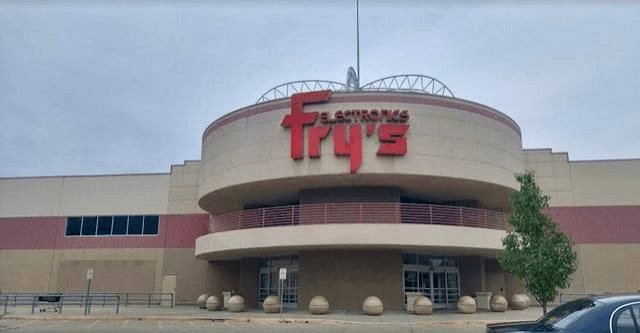


If you’ve searched for a Fry’s Electronics near you recently, you already know something is off. The stores are dark, the website shows a closure notice, and the social media accounts are gone. So what happened?
This article gives you a direct answer: Fry’s is permanently closed. Below, we’ll cover why it shut down, what it meant for customers and employees, and where tech shoppers can go now.
Fry’s Electronics Is Permanently Closed
On February 24, 2021, Fry’s Electronics shut down all 31 of its stores across nine states — permanently. This was not a Chapter 11 restructuring or a temporary pause. The company entered a full wind-down process and stopped operating as a retailer entirely.
The website was replaced with a simple closure notice. Social media accounts were either deleted or made private. There have been no credible reports of a relaunch, rebrand, or partial reopening since then.

If you’re wondering whether there’s any chance Fry’s comes back — based on everything reported, the answer is no.
What Fry’s Electronics Was and Why It Mattered
Fry’s was founded in 1985 in Sunnyvale, California by the Fry brothers, who had ties to the Fry’s Supermarkets family business. The company was headquartered in San Jose — right in the middle of Silicon Valley — and grew into a chain of 30 to 31 big-box stores across nine states.

What made Fry’s different wasn’t just its size. The stores had elaborate themed interiors — think Aztec temples, Area 51 setups, and Alice in Wonderland displays — combined with an enormous selection of computer parts, cables, components, and consumer electronics. For PC builders, engineers, and tech hobbyists, it was one of the few places you could walk in and find obscure parts that no mainstream retailer carried.
That said, Fry’s wasn’t perfect. Even during its peak years, customers complained about poor service, disorganized layouts, and inconsistent stock. The nostalgia around Fry’s is real, but so were the frustrations.
The Real Reasons Fry’s Shut Down
Fry’s official statement pointed to “changes in the retail industry” and the challenges of COVID-19. Both played a role — but blaming the pandemic alone would miss the bigger picture. The decline started years before 2020.
Online Competition Ate Into Foot Traffic
Amazon and other e-commerce platforms slowly eroded Fry’s customer base over a long period. Shoppers could compare prices instantly and get products delivered. Fry’s never built a competitive online shopping experience to fight back.

Meanwhile, Best Buy invested heavily in omnichannel retail — online ordering, curbside pickup, Geek Squad services — giving customers real reasons to stick around. Fry’s didn’t make that kind of investment, which left it more exposed every year.
The Consignment Model Backfired
Fry’s used a consignment inventory model, meaning vendors supplied products to the shelves but only got paid when those items actually sold. When the pandemic hit and vendors pulled back their inventory, Fry’s shelves went visibly empty.
Empty shelves pushed customers online. Fewer customers meant lower sales. Lower sales made vendors even less willing to stock the shelves. It became a cycle the company couldn’t break.
By 2019 and into 2020, many shoppers reported walking into Fry’s stores and finding entire sections bare. That’s not a business that’s struggling — that’s a business already failing.
COVID-19 Was the Final Push
The pandemic reduced in-store foot traffic sharply and disrupted supply chains. For a company already losing ground, those added pressures removed any remaining runway. The closure in February 2021 wasn’t sudden in any meaningful business sense — it was the end of a slow, multi-year decline that finally reached its conclusion.
What Customers, Employees, and Vendors Were Left With
When Fry’s shut down, it left a lot of open questions for people who were mid-transaction with the company.
Repairs and Warranties
Customers who had equipment left at a Fry’s store for in-store repair were directed to a specific email address to arrange retrieval of their items. Customers who held Performance Service Contracts — Fry’s extended warranties — were given a phone number to call during the wind-down period.
It’s worth being direct here: honoring of outstanding obligations was limited. Most customer-facing systems, including returns, online orders, and gift cards, were deactivated quickly. If you had a gift card or an unresolved return, it’s unlikely you were made whole. The wind-down contacts existed, but outcomes varied.
Consignment Vendors
Vendors who had placed inventory in Fry’s stores on consignment were given a separate email contact to reclaim their products. Given the scale of the closure — 31 stores across nine states — that process was likely complicated and not uniformly successful.
Employees
Thousands of employees across multiple states lost their jobs when the stores closed. California and Texas were among the hardest-hit states given the number of locations there. For many workers, especially those who had been with the company for years, this was a significant disruption with very little warning.
Fry’s had been a cultural institution in Silicon Valley in particular. Its closure was widely described as the end of an era for the region’s tech community, even among people who hadn’t shopped there in years.
What This Tells Us About Retail More Broadly
Fry’s isn’t the only big-box retailer to collapse under the weight of e-commerce competition. But its story is a useful case study because the warning signs were so visible for so long.
The company had a loyal customer base, a distinctive identity, and a product selection that Amazon couldn’t fully replicate. But it failed to modernize its inventory systems, invest in e-commerce, or give customers a reason to keep showing up in person. When the environment got harder, there was nothing left to fall back on.
The lesson isn’t that physical retail is dead — Best Buy and Micro Center are both still operating and serving customers. The lesson is that physical retail without a strong online presence and good in-store execution is extremely vulnerable.
For more analysis on business closures, retail trends, and what they mean for consumers and entrepreneurs, Business Regards covers those topics in plain language.
Where to Shop Now If You Miss Fry’s
If you’re a PC builder or tech hobbyist who relied on Fry’s, here are the most practical alternatives:
- Micro Center — The closest thing to what Fry’s offered for PC parts and components. Deep selection, knowledgeable staff, and physical stores. The downside is limited locations, mostly in major metro areas.
- Newegg — A solid online option for computer parts, components, and peripherals. Good for price comparison and bulk buying.
- Amazon — Wide selection, fast shipping, but hit-or-miss for niche parts and third-party sellers require some care.
- Best Buy — Better for mainstream consumer electronics and appliances than for obscure PC components, but has improved its inventory and online experience significantly.
- Local maker spaces and specialty electronics shops — Worth searching in your area if you need truly niche components or want hands-on help.
None of these fully replace what Fry’s offered at its best — that combination of warehouse scale, hobbyist-grade parts, and physical browsing experience. But for most needs, Micro Center and Newegg together come closest.
The Bottom Line
Fry’s Electronics is permanently closed. All 31 stores shut down on February 24, 2021, and the company entered a wind-down process with no plans to reopen. The closure was caused by a combination of long-term pressure from online competitors, a fragile consignment inventory model, and the final blow of the COVID-19 pandemic.
If you had outstanding repairs, warranties, or vendor arrangements with Fry’s, your options at this point are extremely limited. The wind-down contacts provided at closure are long past their useful window.
For tech shoppers moving forward, Micro Center and Newegg are the most practical replacements. Fry’s served a real need — it just ran out of time and adaptability to keep serving it.
Also Read This :