


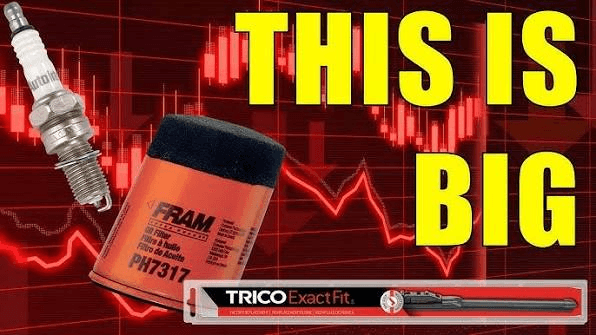


If you’ve walked into AutoZone or Walmart recently and seen FRAM filters marked down 75%, or heard someone say “FRAM is dead,” you’re not alone. The rumors are everywhere. But the full picture is more complicated than a simple shutdown.
Here’s what’s actually going on — who filed for bankruptcy, what the plant closures mean, who bought FRAM, and what you should do if you rely on FRAM filters.
FRAM Is Not Going Out of Business — But Its Parent Company Is in Serious Trouble
First, let’s separate the brand from the corporate structure. FRAM — the company behind those orange oil filters, air filters, and fuel filters — is owned by a larger company called First Brands Group.
First Brands also owns Autolite, Raybestos, Trico, Anco, Centric, and several other auto parts brands. On September 29, 2025, First Brands Group filed for Chapter 11 bankruptcy in the Southern District of Texas.
That filing is at the parent-company level. FRAM itself didn’t file separately. And Chapter 11 is not the same as a company shutting down. It’s a court-supervised process where a business either restructures its debt or sells off assets — all while continuing to operate. Think of it like a household that negotiates with creditors and sells some belongings to stay afloat, rather than losing everything overnight.
According to reporting from The Autopian and Yahoo Finance, First Brands reported assets over $1 billion and debt somewhere between $6 billion and $10 billion, depending on how off-record obligations are counted. That’s an enormous gap — and it’s why the company couldn’t hold together.
What Actually Pushed First Brands Group Into Bankruptcy
This wasn’t a slow fade caused by declining filter sales or competition from cheaper brands. The collapse appears to have been driven by the sheer weight of debt and, according to some reports, internal financial problems.
Local news coverage from WDTN in Greenville, Ohio directly connected the closure of FRAM’s plant there to “financial misconduct by its parent company.” That’s a significant phrase — it suggests the problem wasn’t just bad market conditions.
Some YouTube commentators have gone further, describing what they call “massive corporate fraud” inside First Brands. It’s worth being clear here: those are commentator claims, not court findings. No specific fraud convictions or rulings have been publicly detailed as of this writing. But the scale and speed of the collapse — combined with the Greenville reporting — suggests something more serious than normal business struggles.
Whatever the exact cause, the result is the same: a company carrying an unsustainable debt load collapsed, and the brands it owned — including FRAM — got caught in the middle.

The Plant Closures Are Real — And Workers Are Paying the Price
This is where the “going out of business” narrative gets real for a lot of people. Even if FRAM as a brand survives, the manufacturing closures have had a direct human cost.
Two FRAM plants in Texas — one in Arlington and one in Harlingen — closed in early February 2026. The Greenville, Ohio plant, one of FRAM’s major US facilities, was scheduled for permanent closure on April 30, 2026. That closure affects roughly 300 workers in the local area and about 900 workers across Ohio.
For the people who worked in those plants and for the communities around them, this is effectively a “going out of business” event. The jobs are gone. The facilities are closing. That’s real, regardless of what happens to the FRAM brand name.
But here’s the distinction that matters: a plant closing doesn’t mean a brand disappears. Manufacturing can shift to other facilities. A new owner can produce the same products somewhere else. That’s happened with plenty of brands over the years.
Early reporting also noted that some FRAM operations outside the United States were continuing despite the Chapter 11 filing, which suggests the worst of the operational disruption was concentrated in US facilities.
FRAM Was Sold — Here’s Who Bought It
This is the most important update for anyone wondering whether FRAM will still exist in the future.
As part of the bankruptcy process, First Brands initiated a court-supervised sale of its assets — in whole or in part — with sales expected to extend into 2026. According to posts in Reddit threads and Facebook groups tracking the situation, FRAM has been acquired by PGI Northstar LLC.
The stated plan from PGI Northstar is to keep making FRAM products. The brand is not being retired. It’s being transferred to new ownership that intends to continue the product line.
This kind of thing happens more often than people realize. When a large company goes bankrupt, its individual brands often get sold off to buyers who see value in the name, the customer base, and the product line — even if the original corporate structure falls apart. The FRAM name has decades of recognition in the auto parts market. That has real value to a buyer.
That said, a transition like this takes time. There will likely be a supply gap while PGI Northstar rebuilds production. Product designs or packaging may change over time. And it may be a while before FRAM filters are fully restocked at major retailers.
Why You’re Seeing Huge Discounts Right Now
If you’ve spotted FRAM filters at 75% off, here’s what’s happening: retailers are clearing out legacy inventory. That’s old stock from before the bankruptcy and ownership transfer. Stores need to move it before new product comes in — or before they decide whether to carry the new owner’s version.
This is not a final liquidation sale in the traditional sense. It’s a clearance of existing stock during a transition period. If you need filters right now and the price is good, buying discounted FRAM stock is not inherently risky. These are products that were already manufactured and sitting in a warehouse. The financial trouble at First Brands doesn’t affect the quality of filters that are already boxed and on a shelf.
The bigger question is whether FRAM will be consistently available six months or a year from now. The honest answer is: probably yes, but with some gaps in the short term while PGI Northstar gets production back up to speed.
What Consumers and Mechanics Should Actually Do
If you’re a DIY car owner or a mechanic who uses FRAM filters regularly, here’s practical advice for right now.
- Don’t panic-buy. The brand is not disappearing permanently. There’s no need to stockpile years’ worth of filters.
- Take advantage of clearance pricing carefully. If your store has good discounts on the exact filters you use, buying a few months’ supply is reasonable. Just make sure you’re getting the right part numbers for your vehicles.
- Have a backup brand in mind. During the supply transition, your usual FRAM filter might not be on the shelf. Brands like Wix, Purolator, and Mobil 1 are solid alternatives worth knowing. Cross-referencing part numbers is straightforward on most retailer websites.
- Don’t assume product quality is affected. The financial collapse at First Brands is a corporate accounting problem, not a product safety problem. Filters already on shelves are fine to use.
- Watch for updates from retailers. AutoZone, Walmart, and O’Reilly will reflect stock changes as the new ownership gets production going. If FRAM disappears from shelves temporarily, that’s a sign the transition is still underway — not that the brand is gone.
For a broader look at how corporate bankruptcies affect everyday consumers and brands, Business Regards covers these kinds of business stories in plain language.
The Bottom Line on FRAM’s Future
FRAM is not simply “going out of business.” What happened is that its parent company, First Brands Group, collapsed under a massive debt load — and possibly due to internal financial misconduct — and filed for Chapter 11 bankruptcy in late 2025.
US plant closures followed in early 2026, which is real and painful for the workers and communities involved. But the FRAM brand itself was sold to PGI Northstar LLC, which plans to keep producing FRAM products.
The situation is still in transition. Supply may be uneven for a while. Some product lines or packaging may change under new ownership. But the brand is not dead — it’s changing hands.
If you need filters today, use what’s on the shelf. If FRAM isn’t available, there are good alternatives. And if you’re a mechanic who relies on consistent supply, it’s worth keeping a backup supplier option ready until PGI Northstar has production fully running again.
The story isn’t over — it’s just in a messy middle chapter.
Also Read This :